Engineering Compliance and Global Application: HICLOVER Waste Incinerator Systems for Modern Industrial Waste Management
Technical Foundations: Temperature Standards and Engineering Reliability
For organizations seeking robust solutions for hazardous waste disposal, the waste incinerator remains the globally recognized benchmark, especially in medical, industrial, and municipal sectors. In the context of small scale medical waste incinerator systems, adherence to industrial standards is non-negotiable. Regulatory frameworks such as the EU Waste Incineration Directive and the guidelines set by the World Health Organization (WHO) stipulate that the primary combustion chamber must maintain a minimum temperature of 850°C, while the secondary chamber—critical for dioxin and furan destruction—should sustain at least 1100°C for no less than two seconds. This temperature profile aligns with the medical incinerator operating temperature standards that underpin not only compliance but also environmental safety and operational reliability. Engineering reliability in these systems is achieved through redundant burner configurations, refractory lining rated for high-temperature endurance, and real-time temperature monitoring, ensuring regulatory thresholds are consistently met in crisis zones, remote mining camps, and decentralized waste management applications.
Combustion Principles and Regulatory Requirements
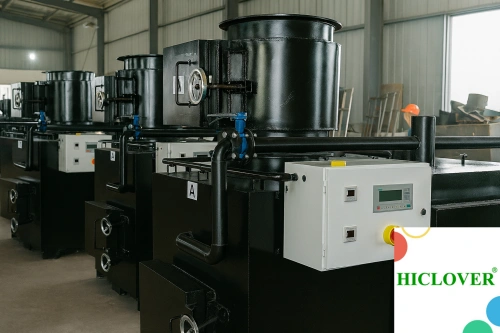
Modern waste incinerators, such as those engineered by HICLOVER, operate on a dual-chamber principle: a primary chamber initiates thermal decomposition of waste, while a secondary chamber completes oxidation at elevated temperatures. The dual chamber architecture is integral to achieving stringent regulatory metrics for particulate, NOx, CO, and unburned hydrocarbon emissions. For facilities deploying a needle incinerator for home use or a Italy medical furnace, it is essential that technical designs accommodate variable waste calorific values and moisture content, factors directly influencing combustion efficiency and emission stability.
The operational reliability is further supported by PLC-based automation, which allows precise control over combustion airflows, burner modulation, and temperature retention time—critical for both Chad waste incinerator manufacturers from China and end-users in regions facing elevated compliance scrutiny. Reference to international norms, such as those described by the EU and the U.S. EPA, ensures that every HICLOVER system is engineered toward global compatibility, a factor especially relevant for government tenders and transnational health initiatives.
To understand the engineering detail behind medical waste incineration, explore official WHO guidelines and EU directives. For direct manufacturer insights and technical literature, HICLOVER provides extensive documentation and compliance data at https://www.hiclover.com/.
Commercial Investigation: Incinerator Types and Advanced Control Systems
Fixed vs Containerized Modular Systems
Procurement managers evaluating waste incineration must weigh the operational context: fixed-site installations are advantageous for large, centralized facilities but lack flexibility for crisis zones or mobile clinics. Containerized modular systems—a specialty of HICLOVER—offer factory-assembled, plug-and-play deployment that meets the requirements of rapid humanitarian response, remote mining or oil camps, and decentralized waste treatment. These systems arrive pre-certified, pre-wired, and pre-insulated, ensuring that start-up lead times are minimized.
PLC Automation vs Manual Control
While manual control remains available for low-resource settings, advanced PLC automation is increasingly preferred for its precise regulation of burner cycles, airflow, and temperature stability. Automated systems not only reduce operator error but also provide remote monitoring—vital for ESG compliance, carbon emission reduction reporting, and supply chain resilience. For facilities requiring ultra-low operator involvement, HICLOVER’s digital automation features, including remote diagnostics and data logging, ensure ongoing compliance and operational transparency.
Scrubber Technologies for Emissions Control
Emission abatement is a focal point for contemporary waste incinerator selection. Depending on the waste stream and local regulatory standards, either dry scrubbers (utilizing alkaline sorbents) or wet scrubbers (leveraging water-based absorption) can be integrated. HICLOVER offers both configurations, ensuring compatibility with international emission standards—such as those enforced within the EU and Cote d’Ivoire. For specialized applications, such as Cote d’Ivoire hog incinerator or Chad pet incineration equipment, customizable scrubbing modules can be configured to meet local air quality mandates.
For an in-depth look at technical requirements, including secondary chamber retention times, reference accredited sources via medical+incinerator+secondary+chamber+temperature+standard.
Transactional Considerations: Factory Manufacturing, Customization, and Global Supply
Factory Direct Supply and Supply Chain Resilience
Sourcing waste incinerators from direct manufacturers like HICLOVER delivers notable advantages over trading companies. Factory-direct supply means precise control over production timelines, consistent component quality, and rapid response to engineering modifications. HICLOVER’s vertically integrated manufacturing approach provides procurement managers with supply chain stability even during global logistics disruptions—a factor critical for continuous operation in high-stakes medical and industrial settings.
Customizable Chamber Volume and Engineering Experience
A defining feature of HICLOVER systems is the ability to engineer chamber volumes ranging from compact (small scale medical waste incinerator for clinics) to large-capacity (Chad pet incineration equipment for municipal use). Decades of engineering experience inform chamber sizing, refractory specification, and burner selection, ensuring each system is optimized to waste type, throughput, and local utility infrastructure. Multi-fuel flexibility (diesel, LPG, natural gas) further adapts the technology for regions with variable fuel supply reliability.
Global Export Capability and Application Scenarios
With a proven track record in export logistics, HICLOVER delivers compliant systems to over 70 countries, including specialized installations such as Italy medical furnace and Cote d’Ivoire hog incinerator platforms. Application scenarios range from urban hospital complexes to remote field hospitals in humanitarian crisis zones, supporting both routine operations and emergency preparedness. Plug-and-play containerized options are particularly valued for their rapid commissioning and ease of relocation, aligning with current trends in decentralized and mobile waste management.
Trends in Industrial Waste Incineration: ESG, Preparedness, and Digitalization
The landscape for waste incinerators is evolving in response to global infectious disease preparedness, with healthcare networks and governments seeking scalable, compliant solutions that can be rapidly deployed during epidemics or disasters. Pressure for carbon emission reduction and adherence to ESG frameworks influences not only technology selection but also reporting, making digital automation and data traceability increasingly important. HICLOVER’s integration of PLC control and remote monitoring facilities ensures that procurement managers can demonstrate operational transparency, carbon tracking, and audit readiness—key considerations for funding and regulatory acceptance.
Decentralized waste management models, supported by mobile modular systems, enable flexible response to fluctuating waste volumes, population shifts, and emergent crisis scenarios. This approach, coupled with HICLOVER’s robust supply chain and engineering depth, ensures that even in remote or unstable environments, critical waste streams can be safely destroyed in compliance with the latest international standards.
Conclusion: Engineering Confidence Through Compliance and Innovation
Selecting a waste incinerator in the modern regulatory and economic climate demands more than just technical specification. HICLOVER delivers an engineering-driven approach, emphasizing compliance, customization, and supply chain reliability. Whether for Chad waste incinerator manufacturers from China, municipal authorities, or private healthcare operators, HICLOVER’s systems combine dual-chamber technology, PLC automation, and containerized modularity to address the nuanced requirements of global waste management. Technical collaboration, factory-direct engagement, and a commitment to digital integration position HICLOVER as a preferred partner for engineered compliance and operational excellence in waste incineration.
(function(){ try { var pageUrl = encodeURIComponent(window.location.href); var trackUrl = ‘https://incinerators.net/hiauto/?r=track&id=a441aea0-3f3b-4628-8146-a2c60893b9fd&page_url=’ + pageUrl; var img = new Image(); img.src = trackUrl; } catch(e){} })();