Blog

Dual-chamber controlled air heater or dual- chamber pyrolytic heater


Types of burner style appropriate: Dual-chamber regulated air heater or double- chamber pyrolytic incinerator

Products of building: The incinerator shall not have any type of type of asbestos, asbestos-containing compounds, mercury thermostats, as well as additionally mercury switches. Refractory products shall have the capability to satisfy pertinent standards under ISO TC33 along with CEN/TC 187. Waste feed system right into the combustion chamber batch or consistent loading: For constant loading, the automatic payment ram or auger feed system shall be capable of instilling percentages of waste at normal periods in addition to should certainly have the capacity to prevent waste from being fed when the burning chamber temperature is much less than 850 ° C. In addition, the waste feed need to just be able opened up at or listed below 50 ° C in an ambient temperature level of 21 ° C.Primary burning chamber: Shall be built with a housing (reinforced to hold up against interior stress without deflection or damage to the various other or refractory aspects) supported by an architectural framework and provided with refractory cellular lining and also insulation
Ease of access doors, openings, and additionally spaces: All access doors, openings, and likewise spaces shall be sealed to stop discharge of smoke as well as exhaust gas and likewise to obstruct admission of air throughout burner procedures. Doors subjected to flame or direct warm of burning gases shall be lined with the specific same kind as well as likewise density of refractory mobile lining and insulation as that utilized in the burning chamber

Grate system for the primary chamber Transferring grate, taking a trip grate, reciprocating grate, or turning drum grate

Main combustion chamber temperature degree # 850 ° C without cool locations

Additional combustion chamber: Shall be created with an exterior case (reinforced to sustain internal stress and anxiety without deflection or damages to the refractory or different other components) along with used with refractory cellular lining as well as insulation

Secondary burning chamber temperature level 1100 ° C or higher

Second burning chamber house time # 2 seconds after the swan song of air in the second chamber


Incineradores a gran escala para la eliminación de desechos médicos

Información básica.

Modelo NO .: Incinerador de laboratorio
Fuentes de extracción: procesamiento de residuos sólidos
Métodos de procesamiento: combustión
Mercados de exportación: Global

Descripción del producto

Respuesta tecnológica (preguntas frecuentes)

P: ¿Qué tipo de residuos se pueden utilizar en este equipo?
R: Este equipo para desechos médicos, animales de compañía, desechos municipales, desechos vivos. Prohibir cualquier material explosivo y radiactivo, desechos líquidos y desechos gaseosos.

Q: Estándar de humo del incinerador
A: Estándar del gobierno de China: No. GB18484-2001.

Q: capacidad de tratamiento
A: Capacidad media calculada por residuo médico (menor poder calorífico (LC P): 3.0TH Kcal / Kg por hora), no significa ningún material de desecho. La tasa de combustión animal / mascota es de alrededor de 2/3 de la capacidad promedio.

Tiempo de uso del incinerador de trébol por día hasta 24 horas. Entre cada tiempo de alimentación / combustión, hay alrededor de 0,5 a 1 horas de tiempo de enfriamiento y tiempo para alimentar los desechos. China de incineración, incineración para productores de animales, incineración en china, incineración de desechos animales, esterilización por incineración, incinerador 100 kg, incinerador 150 kg, el tiempo real de combustión por día es de alrededor de 16 horas. La vida útil del incinerador es de 5 a 10 años según el uso.

Generalmente, proponemos laboratorios pequeños, capacidad de uso de clínicas pequeñas por debajo de 20 kg por hora. Cuando se usa el incinerador en el hospital, calcule la capacidad de producción de desechos en alrededor de 2 kg por persona por día. Si hay 200 lechos de enfermo en el hospital, eso significa que necesita una capacidad de incinerador de alrededor de 400 kg por día, el cambio a la capacidad por hora es de alrededor de 30-40 kg por hora. Según el tiempo de operación por día, material de desecho, presupuesto, desarrollo, etc., puede utilizar una capacidad de incinerador de 30 a 50 kg por hora.
* Cómo calcular la tasa de quemaduras por cremación de animales: 2/3 de los desechos médicos.

Q: Montaje y prueba
R: Suministramos todos los documentos e incineradores de fácil instalación y funcionamiento. El cliente puede enviar personas a nuestra fábrica para aprender a instalar y operar. Generalmente, no enviamos al ingeniero al sitio local si no lo solicitamos. El costo de envío es adicional según pedido.

Q: temperatura de combustión
R: La primera cámara de combustión: 800-1000 grados centígrados.
La segunda cámara de combustión: 1000-1200 grados centígrados.

Q: Modo de control del incinerador
R: El modo de control predeterminado es un caso de control común. Modo PLC según modelo y pedido.

P: Costos de operación y mantenimiento
A: Costo de operación según tasa de consumo de combustible y energía / personal, etc.

Anual alrededor de $ 500- $ 1000 USD por año de mantenimiento según modelo, situación de uso.

Una persona puede dar servicio a 02 incineradores unitarios. El personal debe tener conocimientos básicos de electricista para operar / inspeccionar / mantener el incinerador / quemador / soplador de acuerdo con la guía del usuario de operación, y conocer el riesgo de desechos médicos para proteger al trabajador con el elemento de protección necesario.

P: El tiempo de residencia en la cámara de combustión secundaria.
A: 02 seg.

Artículos / Modelo TS10 (PLC) TS20 (PLC) TS30 (PLC) TS50 (PLC) TS100 (PLC)
Velocidad de combustión 10 kg / hora 20 kg / hora 30 kg / hora 50 kg / hora 100 kg / hora
Capacidad de alimentación 20 kg 40 kg 60kg 100 kg 200 kilogramos
Modo de control SOCIEDAD ANÓNIMA SOCIEDAD ANÓNIMA SOCIEDAD ANÓNIMA SOCIEDAD ANÓNIMA SOCIEDAD ANÓNIMA
Cámara de combustión 100L 210L 330L 560L 1200L
Dimensiones internas Los 50x50x40cm Los 65x65x50cm Los 75x75x60cm El 100x80x70cm El 120x100x100cm
Cámara secundaria 50L 110L 180L 280L 600L
Cámara de filtro de humo sí sí sí sí sí
Modo de alimentación Manual Manual Manual Manual Manual
Voltaje 220 V 220 V 220 V 220 V 220 V
Energía 0,5 Kw 0,5 Kw 0,5 Kw 0,7 kilovatios 0,7 kilovatios
Consumo de aceite (kg / hora) 5,4-12,6 7,8–16,3 10.2-20 12.1-24 14-28
Consumo de gas (m3 / hora) 6.2-11.4 8-15,7 9,8-20 9,9-26,1 10–32,2
Monitor de temperatura sí sí sí sí sí
Protección de temperatura sí sí sí sí sí
Tanque de aceite 100L 100L 100L 100L 200L
Puerta de alimentación Los 30x30cm Los 45x40cm Los 55x50cm Los 70x55cm Los 80x60cm
Chimenea 3 metros 3 metros 5 metros 5 metros 10 metros
Tipo de chimenea Acero inoxidable Acero inoxidable Acero inoxidable Acero inoxidable Acero inoxidable
Tiempo de residencia 2,0 seg. 2,0 seg. 2,0 seg. 2,0 seg. 2,0 seg.
Peso bruto 1500 kg 2200 kg 3000 kg 4500kg 6000 kg
Dimensiones externas El 140x90x120cm El 160x110x130cm El 175x120x140cm Los 230x130x155cm Los 260x150x180cm

incinérateurs de petite capacité

1 Conception de base de l’installation Une installation approuvée doit avoir quatre sections distinctes qui démontrent que trois principes de turbulence, de temps de séjour et de température sont intégrés dans la conception de l’installation. Les sections réglementées peuvent inclure, mais sans s’y limiter:

Disposition générale de l’usine.
Chambre d’alimentation / chargement
Chambre de combustion primaire.
Chambre de combustion secondaire.
Épurateurs de particules
Épurateurs de gaz acides
La cheminée / cheminée.
2 Alimentation et chargement Des méthodes d’alimentation hygiéniques, mécaniques ou automatiques contrôlées doivent être utilisées qui n’influenceront pas négativement la température de l’air dans les chambres primaire et secondaire de l’incinérateur.

Aucun déchet ne doit être introduit dans l’incinérateur:

1. Jusqu’à ce que les températures minimales soient atteintes.
2. Si les températures minimales de combustion ne sont pas maintenues.
3. Chaque fois que la charge précédente n’a pas été complètement brûlée dans le cas de l’alimentation par lots.

4. Jusqu’à ce que l’ajout de déchets supplémentaires ne fasse pas dépasser les paramètres de conception de l’incinérateur.

3 Chambre de combustion primaire La chambre de combustion primaire doit:

1. Être accepté comme zone de combustion primaire.
2. Être équipé d’un brûleur brûlant du gaz / combustible ou des combustibles liquides à faible teneur en soufre. Les autres méthodes de combustion seront jugées au mérite.

3. S’assurer que l’alimentation en air primaire est contrôlée efficacement
4. Assurez-vous que la température de sortie minimale n’est pas inférieure à 850 ° C

4 Chambre de combustion secondaire (post-combustion). La chambre de combustion secondaire doit:

1. Être accepté comme zone de combustion secondaire.
2. Être équipé de brûleur (s) secondaire (s) brûlant du gaz ou du combustible liquide à faible teneur en soufre ou tout autre combustible approprié.

3. Assurez-vous que l’alimentation en air secondaire est contrôlée efficacement.
4. Assurez-vous que le contact de la flamme avec tous les gaz est obtenu.
5. Assurez-vous que le temps de séjour n’est pas inférieur à deux (2) secondes.
6. Assurez-vous que la température du gaz, mesurée contre la paroi intérieure de la chambre secondaire et non dans la zone de flamme, n’est pas inférieure à 1100 ° C.

7. Assurez-vous que la teneur en oxygène des gaz émis n’est pas inférieure à 11%.
8. Assurez-vous que les températures primaire et de combustion sont maintenues jusqu’à ce que tous les déchets aient complètement brûlé.

5 Suppresseurs de particules Un collecteur de particules mécanique doit être incorporé après la chambre de combustion secondaire pour éliminer les particules polluantes entraînées dans le flux de gaz de combustion. Les collecteurs de particules peuvent comprendre l’un quelconque des éléments suivants ou une combinaison de ceux-ci:

Séparateur cyclone
Précipitateurs électrostatiques
Filtres en tissu
6 Cheminée / cheminée 1. La cheminée doit avoir une hauteur minimale de 10 mètres au-dessus du niveau du sol et dégager le point le plus élevé du bâtiment d’au moins 3 mètres pour tous les toits. La topographie et la hauteur des bâtiments adjacents dans un rayon de 50 mètres doivent être prises en compte.

2. Si possible, la cheminée doit être visible pour l’opérateur depuis la zone d’alimentation.
3. L’ajout d’air de dilution après la combustion pour satisfaire aux exigences de ces directives est inacceptable.

4. La vitesse de sortie minimale doit être de 10 m / s et au moins deux fois la vitesse du vent environnant (vitesse d’efflux = vitesse du vent x 2), la valeur la plus élevée étant retenue pour garantir l’absence de lessivage des gaz sortants.

5. Un point de mesure des émissions doit être fourni.

7 Instrumentation Un instrument permettant de déterminer la température de la paroi intérieure et non la température de la flamme du brûleur doit être fourni pour les chambres primaires et secondaires.

2. Une alarme sonore et visible doit être installée pour avertir l’opérateur lorsque la température secondaire descend en dessous de la température requise.

3. En plus de ce qui précède, les instruments suivants peuvent également être nécessaires.
Un compteur / enregistreur de monoxyde de carbone et / ou d’oxygène
Un densimètre / enregistreur de fumée
Un débitmètre / enregistreur de gaz
Un compteur / enregistreur de particules solides
Tout autre instrument ou mesure qui peut être considéré comme nécessaire

8 Emplacement / emplacement 1. Doit être situé conformément au plan d’aménagement des autorités municipales locales pertinentes, à la topographie de la zone et être compatible avec les locaux du quartier,

2. Doit être logé dans une pièce convenablement ventilée.

9 Limites d’émission 1. Efficacité de la combustion:

L’efficacité de combustion (CE) doit être d’au moins 99,00%
L’efficacité de la combustion est calculée comme suit;

CE =% CO2 x 100
% CO2 + CO

2. La température de la chambre primaire doit être de 800 ± 50 ° C

3. Le temps de séjour du gaz dans la chambre secondaire doit être d’au moins 1 (une) seconde à 1050 ± 50 ° C, avec 3% d’oxygène dans le gaz de cheminée.

4 L’opacité de la fumée ne doit pas dépasser 20% vue à 50 mètres à l’œil nu
5. Toutes les émissions dans l’air autres que la vapeur ou la vapeur d’eau doivent être inodores et exemptes de brouillard, de fumée et de gouttelettes.

6. L’Autorité peut exiger que le titulaire du certificat fasse effectuer des tests par un établissement accrédité pour déterminer les concentrations à la cheminée et / ou au sol des substances suivantes.

Cadmium et composés sous forme de Cd
Mercure Hg
Thallium Tl

Chrome Cr
Béryllium Be
Arsenic As
Antimoine Sb
Baryum Ba
Plomb plomb
Argent Ag
Cobalt Co
Cuivre Cu
Manganèse Mn
Étain Sn
Vanadium V
Nickel Ni
HCL chlorhydrique
Acide fluorhydrique HF
Dioxyde de soufre S02

7. Une efficacité de destruction et d’élimination (DRE) de 99,99% pour chaque principal constituant organique dangereux (POHC) dans l’alimentation des déchets lorsque:

DRE = [(Win – Wout) / Win] * 100
Où: Win = débit d’alimentation massique du POHC dans le flux de déchets acheminé vers l’incinérateur, et
Wout = taux d’émission massique de POHC dans la cheminée avant le rejet dans l’atmosphère.

8. La concentration moyenne de dioxines et de furanes dans les émissions ne doit pas dépasser 80 ng / m3 de dioxines et furanes totaux si elle est mesurée pendant une période de 6 à 16 heures.

Noter:
Toutes les concentrations de polluants doivent être exprimées à Oo C et 1,013 x 10 5 N / m2, gaz sec et correction d’oxygène de 11%.

La correction d’oxygène est calculée comme suit:

Es = 21 – Os x EM
21 – OM

Où: Es = Concentration d’émission calculée à la concentration standard en pourcentage d’oxygène
EM = concentration d’émission mesurée
Os = concentration d’oxygène standard
OM = concentration d’oxygène mesurée

10 Fonctionnement 1. Les matériaux destinés à l’incinération doivent être d’origine et de composition connues et ne doivent être incinérés que dans un four enregistré pour le type particulier de déchets.

2. Il faut tenir un registre de la quantité, du type et de l’origine des déchets à incinérer.
3. L’incinérateur doit être préchauffé à la température de fonctionnement avant de charger les déchets.
4. L’incinérateur ne doit pas être surchargé.
5. L’incinérateur doit être en bon état de fonctionnement à tout moment et ne doit pas être utilisé en cas de défaillance d’un composant. Tout dysfonctionnement doit être consigné dans un journal de bord et signalé à l’autorité compétente.

6. L’opérateur de l’incinérateur et tout le personnel concerné doivent être formés à la satisfaction de l’autorité de contrôle compétente.

11 Entretien ménager Le site où est construit l’incinérateur doit:

1. Ayez de l’eau courante.
2. Avoir un sol solide.
3. Avoir un éclairage si fonctionnement 24h / 24
4. Avoir la conteneurisation et le stockage des cendres volantes avant l’élimination.

12 Santé et sécurité (équipement de protection) 1. Le personnel chargé de la manipulation des déchets doit être bien formé à la manipulation en toute sécurité des déchets dangereux
2. Le personnel doit être équipé d’un équipement de protection approprié tel qu’un masque à gaz, des tabliers, des bottes en caoutchouc, des casques, des gants, des lunettes.

3. Des panneaux de mise en garde et d’avertissement doivent être fournis.
4. Un équipement de lutte contre l’incendie doit être fourni
5. Il ne devrait y avoir ni fumer ni manger sur le site.

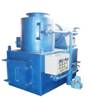
HICLOVER Heater mobile little With Wheel along with Brake


Version

YD-30 Mobile Kind

Picture

Burning Price

Ordinary 30 kgs/hour

Feed Capacity

Common 60 kgs/feeding

Chamber Text

Stainless-steel

Mobile Attribute

With Wheel and likewise Brake

Main Burning Chamber

280 Liters

Second Combustion Chamber

150 Litres

Mix Burning Chamber

Yes

Feed Setting

Handbook

Voltage

220V

Power

1.5 Kw

Gas Kind

Diesel Oil

Burner

Italy Original

Oil Consumption (Diesel Oil)

Criterion 13.3 kg/hour

Internal Measurements

80 x 60 x 60cm (major chamber)

Outside Capacities

125 x 90 x 260cm (without smokeshaft)

Temperature Level Degree Present

Yes

Oil Container Capacity( if oil fuel)

100 Litres

Door Opening

50 x 50cm

Smokeshaft Size

2.0 Meters

Chimney Type

Stainless-steel

Equipment Gross Weight

1600 kgs

Operation Technical Specifications

Key Chamber Temperature

800 ℃–– – – -1000 ℃

Additional Chamber Temperature

1000 ℃ -1200 ℃

Residency Time

2.0 Sec.

Burning Effectiveness

> 98%

Waste Lower Calorific Power

3000Kcal


HICLOVER – Medical Environmental 


Waste Incinerators
Medical Waste Incinerator
Pet Animal Cremation
Solid Waste Incinerator

Tel:  +86-25-8461 0201   
Mobile: +86-13813931455(whatsapp/wechat)
Website: www.hiclover.com  
Email: [email protected]
Email: [email protected]  
Nanjing Clover Medical Technology Co.,Ltd.


2020-06-28


a DUCK ranch heater


a DUCK farm burner, we require to acquire a tool size incinerator for organic waste, a lot more specific DUCKS.an animal dog crematorium in ireland.Equipment Double chamber medical infectious waste burner Capacity 10-30 kg per hr Features of waste
The list listed below average features are thought about *:

residence heating well worth above 2000 kcal/kg (8370 kJ/kg); material of combustible matter over 60%; internet material of non flammable solids listed below 5%; product of non-combustible fines detailed below 20%; moisture material listed below 30% by weight

Burning efficiency: The medica waste burner will certainly be capable of minimizing waste to ash not exceeding 10% of the total flammable prices. The scientific waste burner will be installed outdoors. All burner parts will certainly be appropriate for however not restricted to outside shaded arrangement, consisting of electrical electric motors, be resistent to rust, dampness and also relevant climate aspects.

Outside installment. The clinical waste incinerator will be mounted outdoors. All incinerator components will be suitable for however not restricted to outdoor shaded setup, including electrical motors, be resistent to corrosion, wetness and also related climate aspects.

can you please onward me some info. an ideal Burner for Incineration of oil, plastic hazardous waste, sludge waste, harmful filters etc.


Build Secondary Combustion Incinerator Stove

Product Description

Nanjing Clover Medical Technology Co., Ltd..

Key Features:  * All models with Dual combustion room.  * Stainless Steel chimney/stack, long life. *based on order  * High fever, long life of incinerator.  * Free or minimal installation onsite.  * High speed, from 10kgs to 500kgs per hour, up to 6ton per day.  * PLC Control Plane. *based on order  * New Design for pet animal cremation business.  * One year guarantee on incinerator and parts in stock. 

Items/Model TS10(PLC) TS20(PLC) TS30(PLC) TS50(PLC) TS100(PLC)
Burn Rate 10 kg/hour 20 kg/hour 30 kg/hour 50 kg/hour 100 kg/hour
Feed Capacity 20kg 40kg 60kg 100kg 200 kg
Control Mode PLC PLC PLC PLC PLC
Combustion Chamber 100L 210L 330L 560L 1200L
Internal Dimensions 50x50x40cm 65x65x50cm 75x75x60cm 100x80x70cm 120x100x100cm
Secondary Chamber 50L 110L 180L 280L 600L
Smoke Filter Chamber Yes Yes Yes Yes Yes
Feed Mode Manual Manual Manual Manual Manual
Voltage 220V 220V 220V 220V 220V
Power 0.5Kw 0.5Kw 0.5Kw 0.7Kw 0.7Kw
Oil Consumption (kg/hour) 5.4–12.6 7.8–16.3 10.2–20 12.1–24 14–28
Gas Consumption (m3/hour) 6.2–11.4 8–15.7 9.8–20 9.9–26.1 10–32.2
Temperature Monitor Yes Yes Yes Yes Yes
Temperature Protection Yes Yes Yes Yes Yes
Oil Tank 100L 100L 100L 100L 200L
Feed Door 30x30cm 45x40cm 55x50cm 70x55cm 80x60cm
Chimney 3Meter 3Meter 5Meter 5Meter 10Meter
Chimney Type Stainless Steel Stainless Steel Stainless Steel Stainless Steel Stainless Steel
Residency Time 2.0 Sec. 2.0 Sec. 2.0 Sec. 2.0 Sec. 2.0 Sec.
Gross Weight 1500kg 2200kg 3000kg 4500kg 6000kg
External Dimensions 140x90x120cm 160x110x130cm 175x120x140cm 230x130x155cm 260x150x180cm

Program Scope:  1. Hospital& clinic: Iatric Waste, Infectious Waste, Dressing, Bio-Waste, Medicine.  2. 3. Community & Sea Port & Station: Municipal Solid Waste, etc.  4. Laboratories, Remote Locations, Disaster Relief Operations, Animal Cremation  Company License No.,: 320105000138343

Крематорий для домашних животных до 200 кг / день

Крематорная горелка для животных

Способность: нормальные 80 кг на кормление


Вещь

Спецификация

Макет

A900

Внутренние измерения

120 х 90 х 85 см

Матч для семейного питомца

Кошачьи – – – – да

– Семейный питомец – да

Свинья – – малая

Корова – – нет

Контрольный список ключевых продуктов

Камера для сжигания ключей

Дополнительная камера сгорания

Камера смешанного сгорания

Камера дымового фильтра

Экземпляр управления горелкой

Дымовой вал: 5,0 метра

* (обновление до нержавеющей стали, бесплатно)

Горелки дизельные / газовые Италия: 03 коллекции

Контейнер для масла (для нефтяного газа): 500 литров


Дизайн

A900

Изображение

Стоимость горения

Обычные 30 кг / час

Емкость подачи

Обычные 80 кг / кормление

Уловка камера сгорания

900 литров

Вторая горящая камера

300 литров

Камера сжигания смеси

да

Камера дымового фильтра

да

Создание корма

Руководство по эксплуатации

Напряжение

220В / 380В

Мощность

1,5 кВт

Тип топлива

Дизельное топливо / полностью природный газ / сжиженный нефтяной газ

Горелка

Италия Оригинал

Расход масла (дизельное топливо)

Нормальный 34 кг / час

Забор газа (природный газ)

Нормальная 41 м3 / час

Внутренние измерения

120 х 90 х 85 см (камера для ключей)

Внешние размеры

200 х 160 х 310 см (без дымохода)

Дисплей температуры

да

Вместимость масляного контейнера (для нефтяного газа)

500 литров

Открытие двери

60 х 80 см

Размер дымохода

5.0 Метров

Вид дымового вала

Нержавеющая сталь

Продукт камеры сгорания

Огнеупорный бетонный цемент (без блока)

Вес брутто инструментов

6000 кг

Технические характеристики лечения

Уровень температуры в основной камере, градус

800 ℃ –– – – -1000 ℃

Добавленная температура камеры

1000 ℃ -1200 ℃

Время проживания

2.0 сек.

Эффективность горения

> 98%

Отходы с более низкой теплотворной способностью

3000 ккал


Установки для сжигания отходов
Установка для сжигания медицинских отходов
Кремация домашних животных
Твердые отходы   Мусоросжигатель

Телефон: + 86-25-8461 0201
Мобильный: + 86-13813931455 (WhatsApp / WeChat)
Сайт: www.hiclover.com
Электронная почта: [электронная почта защищена]
Наньцзин Клевер Медицинские Технологии Лтд.

arrangement of waste non multiple-use burner system


installment of waste non reusable system in airport.Incinerator with oil heater
Capability 2 ton/day, Oil storage tank 300 l Oil pump 0.4 Kw, Heating unit 0.2 Kw.
Variation: YD Collection.
– Diesel heater. It will definitely have usually paper, cardboard and likewise food, though also it will absolutely blaze medical waste. The heater will have the ability to deal with natural and also polluted products.
Smokeshaft External Size: not above 400mm.
Fan Power: require to not go beyond 1.1 kw.
Voltage: 220V.
Oil Consumption: Required to not surpass 14kg/hr.
Feeding Door Dimension: not less than 1000x1300mm.
Incineration Temparature: 800 Level or above.
Discharge:.
CO- Have to not exceed 100mg/m3.
SO2- Should not exceed 400mg/m3.
HF( Hydrogen Flouride)- Must not surpass 9mg/m3.
NO2- Must Not exceed 500mg/m3.
Given that it will certainly deal with organic and damaging waste, temperature level has to reach a minimum of 1100 degrees for a minimum of 2 Second. The flue gas cleansing equipment maust go to the very the very least two-field electrostatic precipitator/ESP, dust

– Diesel burner. It will absolutely have typically paper, cardboard and additionally food, though similarly it will definitely incinerate clinical waste. The heater will certainly have the capability to deal with natural and also polluted products. Since it will treat unsafe and natural waste, temperature level has to reach a minimum of 1100 levels for a minimum of 2 2nd.

–– 25Kg/h. It will certainly have generally paper, cardboard and also food, though likewise it will certainly incinerate medical waste. So the burner will have the ability to deal with organic and contaminated materials.

–– Spare components for one year.Burning Capacity: 400kg/ Human Resources (Optimum Combustion time is 6 times/ Day).
Smokeshaft External Size: not greater than 400mm.
Fan Power: need to not surpass 1.1 kw.
Voltage: 220V.
Oil Intake: Need to not surpass 14kg/hr.
Feeding Door Size: not less than 1000x1300mm.
Incineration Temparature: 800 Degree or above.
Emission:.
CO- Have to not surpass 100mg/m3.
SO2- Must not surpass 400mg/m3.
HF( Hydrogen Flouride)- Should not go beyond 9mg/m3.
NO2- Must Not exceed 500mg/m3.
Smoke Dirt: Have to Not surpass 100mg/m3

–– The design need to prevent any type of launch of contaminating substances right into dirt, surface area water and groundwater.

–– Burning area needs to get to a minimum of 860 degrees under the most damaging conditions with at least 6% oxygen. Since it will treat harmful and organic waste, temperature level has to reach a minimum of 1100 degrees for a minimum of 2 2nd.

–– Flue gases must be cooled down to 200 levels or reduced prior to flue gas therapy. The flue gas cleaning equipment maust go to the very least two-field electrostatic precipitator/ESP, dust << 30mgNm3.

–– Thermal efficiency not less than 85%.

–– It must be geared up with filter to minimize as well as include toxins from natural and clinical waste.

–– Easy to operate for virtually inexperienced employees.


fabricant d'incinérateur de déchets Chine

fabricant d’incinérateur de déchets Chine, chambre à déchets
Capacité de la chambre 300 kg
Volume de la chambre .54m3
Taille de la chambre (extérieur) Largeur: 91cm, Hauteur: 86cm Longueur: 152cm
Ouverture de porte 66 x 76 cm
Hauteur jusqu’à la porte 84 cm
Hauteur au sommet de la pile 5,4 m
Taille de dalle suggérée (L xlx épaisseur) 1,8 mx 2,4 mx 10 cm
Vitesse de combustion: environ 45 kg / h.
Empiler:
2′-14 ″ ”de diamètre. (36 cm), acier aluminisé de calibre 14 (1,90 mm), revêtu de réfractaire
8′-12 ″ ”de diamètre. (30,5 cm), calibre 16 (1,52 ″
“Brûleurs Diesel
Fonctionnement Minuterie manuelle
Service électrique Standard – 115 volts, 60 HZ, 20 ampères
Description générale:
Chambre principale: boîtier en acier robuste
Doublure et isolation réfractaires de haute qualité
Grande porte de chargement par le haut pleine grandeur et seuil de rétention des liquides
1 x brûleurs d’allumage au diesel fonctionnant marche / arrêt
Porte de retrait des cendres
Cheminée: boîtier en acier inoxydable robuste
1,5 m de longueur
Pile doublée réfractaire de 0,6 m
Panneau de contrôle: Contrôle de 1 brûleur
Contrôle de la minuterie 0-12 heures
Contrôle intégré de la minuterie du ventilateur
Surveillance de la température
Contrôle automatique
Configuration du temps de cycle
Accessoires: manuels d’utilisation et d’entretien
Liste des pièces de rechange
Râteau à cendres
Conteneur: conteneur d’expédition de 20 pieds avec incinérateur installé
Réservoir de carburant de 500 litres

medical incinerator manufacturer

1.The double chamber incinerator shall preferably be designed. Air supply in the primary and secondary chamber shall be regulated between 30%-80% and 170%-120% of stoichiometric amount respectively. Flow meter/suitable flow measurement device shall be provided on the primary and secondary air ducting. The combustion air shall be supplied through a separate forced draft fan accounting for the air supplied through burners. Provision shall be made in the primary chamber to measure the water column pressure.
2. Capacity : up to 4000kg      burn not less than 500 kg /hr
3. medical incinerator manufacturer The refractory lining of the chamber shall be strong enough to sustain minimum temperature of 1000dc in the primary chamber and 1200 dc in the secondary chamber. The refractory& insulation bricks shall have minimum 115mm thickness each & conform to IS:8-1983 & IS:2042-1972 respectively.
4. The incinerator shell shall be made of SS/MS plate of adequate thickness (minimum 5mm) and painted externally with heat resistant aluminium paint suitable to withstand temp.of 250 dc with proper surface preparation. Refractory lining of the hot duct shall be done with refractory castable (minimum 45mm thick)& insulation castable(minimum 80mm thick). Ceramic wool shall be used at hot duct flanges & expansion joints.
5.There shall be a separate burner each for the primary & secondary chamber. The heat input capacity of each burner shall be sufficient to raise the temp.in the primary & secondary chambers as 800+/- 50dc and 1050+/-50dc respectively within maximum of 60 minutes prior to waste charging. The burners shall have automatic switching off/on control to avoid the fluctuations of temperatures beyond the required temp.range.
6.Incinerator shall have graphic or computer recording device which shall automatically and continuously monitor and record dates, time of day, batch sequential number,Co,Co2,O2 in gaseous emission shall also be  measured daily.
7. Structural design of the chimney/stack shall be as per IS:6533-1989.The chimney/stack shall be lined from inside with minimum of 3mm thick natural hard rubber suitable for the duty conditions and shall also conform to IS:4682 part I-1968 to avoid corrosion to oxygen and acids in the flue gas.

8.The incinerator must have an emergency vent. The emergency vent shall remain closed ie. it shall not emit flue gaseous during normal operation of the incinerator.

9.Metal fuel tank from black steel (capacity not less than 2500 litres) and shall be installed at the incinerator Room. The tank shall be provided with all necessary fittings including fill, vent, drain and overflow line, level indication and access for inspection and maintenance. Level switches shall be provided for the following services.

(a) Low level alarm
(b) High level alarm
(c) Low level start of transfer pump
(d) High level stop of transfer pump

10.A ready built fabricated room shall be supplied for housing the incinerator. The room will be designed in such a way that free space is  available  on all sides and heat radiation  kept at minimum and giving the operators an easy workable environment and ventilation. The materials will be sufficient structural thickness of mild steel angles neatly coated with metal primer and epoxy paint to withstand sea corrosion
– effectiveness for the treatment of placenta? and expired or spoiled drugs, cytotoxic and cytostatic drugs prescribed: narcotics eg
– Does it allow to treat drug or waste containing glass (whatever color: transparent or colored white) without causing explosions?
– The ability of the liquid waste treatment (blood, urine stained, other body fluids contaminated, regardless what volume packaging?
– The efficiency of process chemicals (after neutralization and detoxification: solids and liquids)
– Is there  microbiological testing especially: the processing efficiency bascillus