Tel: +86-25-8461 0201
Website: www.hiclover.com
Email: [email protected]


EPA awards grants to support pollutant reduction plan tied to Conowingo reservoir infill
PHILADELPHIA – (September 26, 2019) The U.S. Environmental Protection Agency (EPA) today announced awards totaling nearly $600,000 for three projects to further a joint Chesapeake Bay Watershed Implementation Plan (WIP) to compensate for the loss of pollutant trapping capacity in the Conowingo Dam reservoir.
The reservoir has become filled with sediment and is almost at capacity. During large storms and severe floods, the fast-moving flows of the Susquehanna River move sediment and attached nutrients over the dam and downstream into the Chesapeake Bay.
The Chesapeake Bay Program’s six watershed states (Delaware, Maryland, New York, Pennsylvania, Virginia and West Virginia), the District of Columbia and the Chesapeake Bay Commission agreed to develop a collaborative WIP that will include actions and commitments jurisdictions will take to best account for the additional pollutant loads.
EPA is funding three activities to fulfill the Chesapeake Bay Program’s commitment to address the Conowingo Dam infill:
“These awards are part of EPA’s continuing financial and technical assistance to the states and the District of Columbia to help restore and protect the health of the Chesapeake Bay and local waters,” said EPA Administrator Andrew Wheeler. “The award recipients have the background and experience to help us meet the challenge posed by the additional pollutant loads stemming from the Conowingo Dam infill.”
“We appreciate EPA’s support of multi-state progress on the Conowingo watershed plan and congratulate the impressive awardees and their partners,” said Maryland Governor Larry Hogan. “We all benefit from innovative partnerships to protect and restore the Chesapeake Bay.”
EPA Regional Administrator Cosmo Servidio said the financing strategy is expected to identify a variety of funding sources, which will help farmers and local governments in Pennsylvania and across the watershed implement clean water practices.
The watershed states and the District of Columbia each have developed their own WIPs to meet the pollutant reduction goals of the Chesapeake Bay Total Maximum Daily Load (Bay TMDL). The final Phase III WIPs were submitted to EPA on August 23 and are currently under review.
The Conowingo WIP is independent of these plans and is focused specifically on offsetting the additional load due to the Conowingo reservoir infill. A Chesapeake Bay Program steering committee was formed to oversee development and implementation of the Conowingo WIP along with EPA. A total of $200,000 of the awards funding comes from EPA’s Chesapeake Bay grants to the watershed states and the District.
The Chesapeake Bay Program estimates that an additional reduction of 6 million pounds of nitrogen and 0.26 million pounds of phosphorus is needed to mitigate the infill-related water quality impacts.
Quotes from the Grantees:
Center for Watershed Protection, Bryan Seipp, Project Manager:
“Addressing the increasing nutrient and sediment loads to the Chesapeake Bay as a result of Conowingo Dam reaching dynamic equilibrium is a complex and challenging task. Like all watershed planning efforts success in reducing pollutant loading to streams, rivers, and the Chesapeake Bay will require innovative solutions, dedicated stakeholders, and consistent, open communication.”
Chesapeake Bay Trust, Jana Davis, Executive Director:
“The Chesapeake Bay Trust is excited to work with the University of Maryland and a large number of other partners on the incredibly challenging but rewarding financing component of this project. We hope the ideas and financing mechanisms developed here will have wide application across the watershed.”
Chesapeake Conservancy, Jeffrey Allenby, Director of Conservation Technology:
“We are excited to partner with some of the leading organizations in the watershed. We have a large challenge ahead, but more importantly a large opportunity to usher in the future of data driven restoration.”
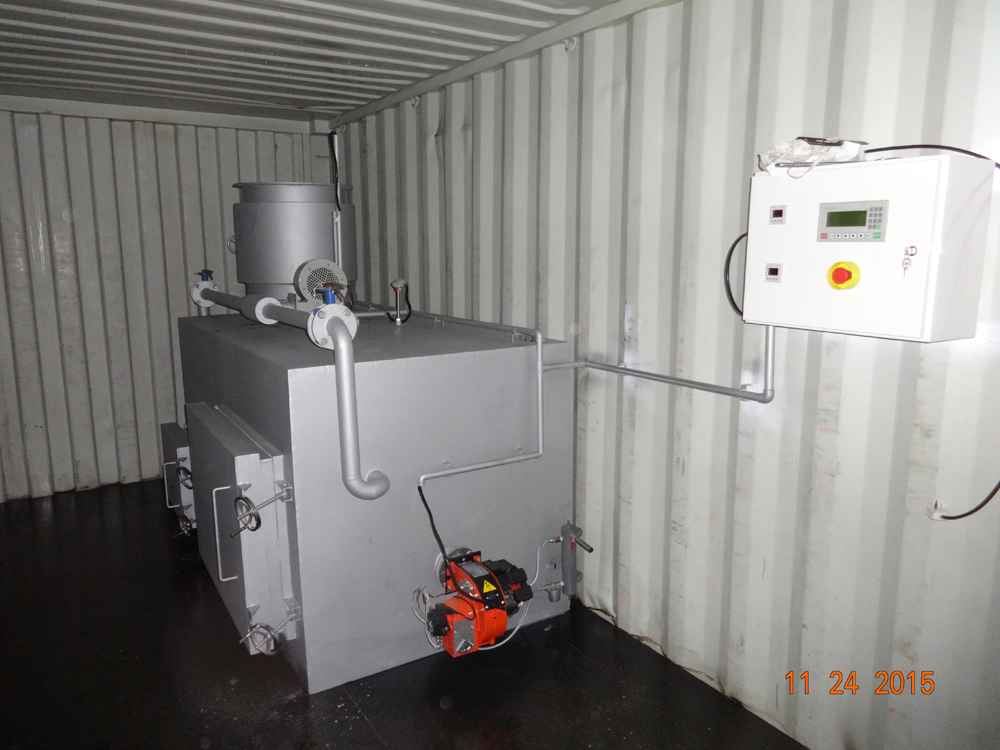
L’incinérateur conteneurisé est un type d’incinérateur mobile. nous construisons l’incinérateur et montons l’incinérateur dans un conteneur d’expédition (conteneur de 20 pieds ou conteneur de 40 pieds), avec les travaux de base nécessaires, tels que le revêtement de sol, l’éclairage, le câblage, etc.
Articles / modèle
CA30
Image
Taux de remise
Commun 10 kg / heure
Capacité d’alimentation
30 kg en moyenne par repas
Contrôle Etablissement
PLC (brûleur de contrôleur de raisonnement programmable)
Chambre de combustion
330 L
Mesures internes
75x75x60cm
Chambre supplémentaire
180 L
Chambre de filtre à fumée
Oui
Établissement d’alimentation
Alimentation manuelle
Tension
220V
Pouvoir
0,5 Kw
Prise d’huile (kg / heure)
Ordinaire 13,3
Utilisation de gaz (GN, m3n / heure)
Typique 16
Utilisation de gaz (GPL, m3n / heure)
Moyen 11,7
Moniteur de niveau de température
Quatre programmes numériques
Défense de niveau de température
Oui
Conteneur d’huile
100 L ou même beaucoup plus (en option)
Porte d’alimentation
55 x 50 cm
Smokeshaft
5 mètres ou aussi beaucoup plus (facultatif)
Type d’arbre à fumée
Acier inoxydable
1er.
Poids brut
4000kg (sans conteneur)
Dimensions extérieures
175x120x140cm
Poids brut
4000kg (sans conteneur)
Mesures externes
175x120x140cm
Waste Incinerator Model TS150 PLC, Overview
This model is small-scale waste incineration equipment for small waste output.
Construction is dual/double combustion chamber with 02 sets oil burner, batch loadincineration equipment. Waste feed chamber is 1570Liters (1.57m3, TS150 PLC).Primary & Secondary combustion chambers and smoke filter chamber.Batch load on the bottom of chamber. Incinerator PLC panel control suit for local operation.Primary Combustion Chamber:※Main Feature:— Double Combustion Chamber— Double Italy Burner— Smoke Filter included–Burning Rate: 50-200kgs per hour optional–Primary Combustion Chamber: 1.57M3(1570Liters)— Incinerator Mainbody steel: 8mm thickness— Paint for outside face: 800°C Rate—Chamber Material: High Alumina Fire Brick Wall, 1750℃ Rate— Idea for campsite average or below 600 people— Chimney: 10 Meters, Stainless steelFeeding door primary chamber:
Items/Model
TS150(PLC)
Picture
Principle
Waste Incineration Treatment
Burn Rate
Average 150 kg/hour
*(50/100/200kgs/hour optional)
Feed Capacity
Average 750kg/feeding
Control Mode
PLC(Programmable Logic Controller Incinerator)
Main Body Steel
8mm thickness
Chamber Material
High Alumina Fire Brick Wall, 1750℃ Rate
Paint for outside face
800°C Rate
Combustion Chamber
1570L
Internal Dimensions
150x100x105cm
Secondary Chamber
750L
Smoke Filter Chamber
Yes
Feed Mode
Manual
Voltage
210/230V 50/60Hz
Power
0.9Kw
Oil Consumption (kg/hour)
Average 20.4-28.0(D.O)
Gas Consumption (m3/hour)
***
Temperature Monitor
Digital Display
Temperature Protection
Yes
Oil Tank
300L
Feed Door
80x60cm
Chimney
10Meter
Chimney Type
Stainless Steel
1st. Chamber Temperature
800℃–-1000℃
2nd. Chamber Temperature
1000℃-1200℃
Residency Time
2.0 Sec.
Gross Weight
8500kg
External Dimensions
300x160x280cm(without chimney)
Waste IncineratorsMedical Waste IncineratorPet Animal CremationSolid Waste Incinerator
Tel: +86-25-8461 0201Mobile: +86-13813931455(whatsapp/wechat)
Website: www.hiclover.com
Email: [email protected]
Email: [email protected]Nanjing Clover Medical Technology Co.,Ltd.
Waste Incinerator Model TS150 PLC, Overview
This model is small-scale waste incineration equipment for small waste output.


Items/Model
TS150(PLC)
Picture
Principle
Waste Incineration Treatment
Burn Rate
Average 150 kg/hour
*(50/100/200kgs/hour optional)
Feed Capacity
Average 750kg/feeding
Control Mode
PLC(Programmable Logic Controller Incinerator)
Main Body Steel
8mm thickness
Chamber Material
High Alumina Fire Brick Wall, 1750℃ Rate
Paint for outside face
800°C Rate
Combustion Chamber
1570L
Internal Dimensions
150x100x105cm
Secondary Chamber
750L
Smoke Filter Chamber
Yes
Feed Mode
Manual
Voltage
210/230V 50/60Hz
Power
0.9Kw
Oil Consumption (kg/hour)
Average 20.4-28.0(D.O)
Gas Consumption (m3/hour)
***
Temperature Monitor
Digital Display
Temperature Protection
Yes
Oil Tank
300L
Feed Door
80x60cm
Chimney
10Meter
Chimney Type
Stainless Steel
1st. Chamber Temperature
800℃–-1000℃
2nd. Chamber Temperature
1000℃-1200℃
Residency Time
2.0 Sec.
Gross Weight
8500kg
External Dimensions
300x160x280cm(without chimney)
Компания Nanjing Clover Medical Technology Co., Ltd. является ведущим производителем мусоросжигательных установок в Китае. Мы – местный производитель и один из крупнейших экспортеров Китая. Технические характеристики инсинаратора (емкость 50 кг), инсинаратора (масло syc-10), инсинаратора (масло syc-10), инсинаратора мощностью 20 кг в час, инсинератора 8, оборудования для пиролитической инсинерации – это основная обработка отходов во всем мире, для медицинских отходов , Сжигание животных, кремация домашних животных и другие твердые вещества. Емкость от 10кг / час. До 500 кг / час, до 6 тонн в день. В настоящее время мы поставляем различные серии в соответствии с требованиями местных клиентов и проектируем обновленную мусоросжигательную печь с использованием наших передовых технологий. Обновленные конструктивные особенности нашего ассортимента мусоросжигательных печей делают их одними из самых экономичных в мире.
Ключевая особенность:
* Все модели с двойной камерой сгорания.
* Дымоход / дымоход из нержавеющей стали, долгий срок службы. * по заказу
* Высокая температура, длительный срок службы инсинератора.
* Бесплатная или минимальная установка на месте.
* Высокая скорость сжигания, от 10 кг до 500 кг в час, до 6 тонн в день.
* Плоскость управления ПЛК. * по заказу
* Новый дизайн для кремации домашних животных.
* Один год гарантии на инсинератор и запасные части.
| Предметы / Модель | TS10 (ПЛК) | TS20 (ПЛК) | TS30 (ПЛК) | TS50 (ПЛК) | TS100 (ПЛК) |
| Скорость сжигания | 10 кг / час | 20 кг / час | 30 кг / час | 50 кг / час | 100 кг / час |
| Емкость подачи | 20кг | 40кг | 60кг | 100кг | 200 кг |
| Режим управления | ПЛК | ПЛК | ПЛК | ПЛК | ПЛК |
| Камера сгорания | 100л | 210л | 330 л | 560 л | 1200L |
| Внутренние размеры | 50x50x40 см | 65x65x50 см | 75x75x60 см | 100x80x70 см | 120x100x100 см |
| Вторичная камера | 50 л | 110л | 180л | 280L | 600 л |
| Камера дымового фильтра | да | да | да | да | да |
| Режим подачи | Руководство по эксплуатации | Руководство по эксплуатации | Руководство по эксплуатации | Руководство по эксплуатации | Руководство по эксплуатации |
| Напряжение | 220В | 220В | 220В | 220В | 220В |
| Мощность | 0,5 кВт | 0,5 кВт | 0,5 кВт | 0,7 кВт | 0,7 кВт |
| Расход масла (кг / час) | 5,4–12,6 | 7,8–16,3 | 10,2–20 | 12.1–24 | 14–28 |
| Расход газа (м3 / час) | 6,2–11,4 | 8–15,7 | 9,8–20 | 9,9–26,1 | 10–32,2 |
| Монитор температуры | да | да | да | да | да |
| Температурная защита | да | да | да | да | да |
| Масляный бак | 100л | 100л | 100л | 100л | 200л |
| Дверца подачи | 30×30 см | 45×40см | 55×50см | 70×55см | 80×60 см |
| Камин | 3 метра | 3 метра | 5 метров | 5 метров | 10 метров |
| Тип дымохода | Нержавеющая сталь | Нержавеющая сталь | Нержавеющая сталь | Нержавеющая сталь | Нержавеющая сталь |
| Время проживания | 2.0 сек. | 2.0 сек. | 2.0 сек. | 2.0 сек. | 2.0 сек. |
| Вес брутто | 1500 кг | 2200кг | 3000кг | 4500кг | 6000кг |
| Внешние размеры | 140x90x120 см | 160x110x130 см | 175x120x140 см | 230x130x155 см | 260x150x180 см |
Déchiqueteur de déchets médicaux
Capacité: devrait être de 150 litres.
Doit être capable de déchiqueter jusqu’à 100 litres de déchets traités.
7
La technologie doit être capable de traiter les déchets hospitaliers, y compris les objets tranchants comme les aiguilles,
lancettes, scalpels et matériaux souples comme les bandages.
Doit rendre les déchets méconnaissables.
Les documents d’accompagnement suivants doivent être fournis avec le système de traitement et doivent
être disponible sur le site:
C401 91 (2005) Classification type des réfractaires coulables d’alumine et d’alumine-silicate
C612 04 Bloc de fibre minérale et isolation thermique du panneau
70 07 Code national de l’électricité
82 04 Incinérateurs et systèmes et équipements de manutention des déchets et du linge
50 07… Boîtiers pour matériel électrique
PARTIE 2 PRODUIT
2.1 INSTALLATION DE L’INCINÉRATEUR
les composants sont convertis en gaz par la chaleur produite par une combustion incomplète à la suite d’une carence
d’air, et un réacteur à gaz (réacteur thermique) dans lequel le gaz est brûlé avec un excès d’air contrôlé.
Average 50-100 kg/hour Burn Rate
Items/Model
TS75(PLC)
Principle
Waste Incineration Treatment
Burn Rate
Average 50-100 kg/hour
Feed Capacity
Average 200-300 kg/feeding
Control Mode
PLC(Programmable Logic Controller Incinerator)
Face Oil Paint
800℃
Combustion Chamber
768 Liters (0.768M3)
Internal Dimensions
1200x800x800mm
Secondary Chamber
384 Liters (0.384M3)
Smoke Filter Chamber
Yes
Feed Mode
Manual
Voltage
210/240V 50Hz 1P
Power
1.3Kw
Oil Consumption (kg/hour)
Average 20.4(D.O)
Thermal capacity(kw/hour)
166-332
Gas Consumption (m3/hour)
***
Temperature Monitor
Digital Display
Oil Tank
3000L
Feed Door
60x50cm
Chimney
10Meter
Chimney Type
Stainless Steel
1st. Chamber Temperature
800℃–-1000℃
2nd. Chamber Temperature
1000℃-1200℃
Residency Time
2.0 Sec.
Gross Weight
7500kg
External Dimensions
260x160x250cm(without chimney)
We supply single combustion chamber, double combustion chambers, three combustion chambers and multi-combustion
chambers waste incinerators for laboratory, clinic, hospital, medical center, hygiene clinical waste destruction with medical
disposable, biological waste, medical plastic waste, hazardous waste, red bag waste, needle disposal, gauze and bandages,
sealed sharp containers, pathological waste, trace-chemotherapeutic wastes, etc.
Our range of incinerators cater for small to large scale animal cremation related businesses, such as poultry farms, cattle
farms, sheep farms, pig farms, stables, kennels, testing laboratory, catteries, pet crematoriums.
The incinerator burn waste in primary combustion chamber and burn the smoke from primary combustion chamber again to
make sure environmentally friendly with no black smoke, smelless, reduce pathogenic bacteria infection.
System solutions for medical waste environmental, including waste incineration, smoke emission treatment, high-temperature
sterilization, ultraviolet sterilization lamp, waste shredder, needle destroyer, medical waste package, sharp containers, etc.
The pet cremation equipment humanized design with movable platform, small space covers for modern pet cremation
business owner all over the world.
The containerized mobile incinerator mounted in ISO container before leave factory, pre-installation, no incineration house
build construction, movable by truck and ultraviolet lamp sterilization inside.
We are growing brand for environmental protection field, and market share with most of
Africa, Middle East, Southeast Asia countries and part of North America, Europe territory. We are trusted partner for governmental
organizations, non-profit organizations, international contractors, logistics organizations, military, pet cremation business owners, etc.
We have export experience more than 40 countries, including war zone like Iraq, Afghanistan, Somalia, South Sudan.
We are china incinerator manufacturer, contractor and exporter. Manufacturer make reasonable price for incinerator customer,
supply medical incinerator, hospital incinerator, animal incinerators, hog incinerators, pet cremation equipment, small incinerator,
pet incinerator, animal incinerator, portable incinerator, small animal incinerator, infectious waste pyrolysis machine, laboratory
incinerator.

EPA Awards Louisiana Dept. of Health Over $1 Million for
Safe Drinking Water Programs
Media contacts: Jennah Durant or Joe Hubbard, [email protected] or 214 665-2200
DALLAS – (Sept. 26, 2019) The U.S. Environmental Protection Agency (EPA) recently announced a grant to the Louisiana Department of Health (LDH) for $1,042,627 for safe drinking water programs. These programs ensure compliance with the National Primary Drinking Water Regulations under the federal Safe Drinking Water Act.
“Making sure that the water we drink is safe is at the heart of EPA’s mission,” said Regional Administrator Ken McQueen. “The Louisiana Department of Health and the many drinking water systems in the state continue to be effective partners in bringing safe drinking water to communities throughout Louisiana.”
The funding will support a variety of activities in LDH’s public water system supervision program, including developing drinking water regulations, maintaining an inventory of drinking water systems, and managing information on public water systems. The grant will also provide technical assistance to public water systems and assistance in enforcing drinking water regulations. EPA previously awarded LDH $242,373 for drinking water programs, bringing the total to $1,285,000 for this fiscal year.
Background:
The Safe Drinking Water Act (SDWA) is the federal law that protects public drinking water supplies throughout the nation. Under the SDWA, EPA sets standards for drinking water quality and with its partners implements various technical and financial programs to ensure drinking water safety. In Louisiana, EPA has delegated the authority for SDWA programs to the Louisiana Department of Health.
For more about the Safe Drinking Water Act: https://www.epa.gov/sdwa
For more about EPA’s work in Louisiana: https://www.epa.gov/la
Connect with EPA Region 6:
On Facebook: https://www.facebook.com/eparegion6
On Twitter: https://twitter.com/EPAregion6
About EPA Region 6: https://www.epa.gov/aboutepa/epa-region-6-south-central
# # #